The Brief for the A2 project:
 |
| OCR Specification |
The work itself would be produced in a group, so on order to begin the researching and planning we had to formulate one.
Nayara Ribeiro Alvarenga 6007 (Me)
Jordan Francois 6071 http://jordanjf6071.blogspot.co.uk
Henry Hyseni 6066 http://henryhysenia2.blogspot.co.uk
Monet Clarke 6024 http://monetclarke6024.blogspot.co.uk
The Transition between AS and A2:
The transition from AS to A2 meant that i would no longer be dealing with only voice recordings. The A2 work involved a variety of different concepts in comparison to AS, the work is far more advanced including careful planning of imagery, camera shots, visual effects, voice overs, editing and overall it required a greater level of creativity. To produce high level work it meant that my work could not just be a completion of different ideas i have seen in other music videos but a construction of my own original ideas.
Transition:
Skills
|
AS Blog Evidence
|
A2 Blog Evidence
| |
Digital Technology
|
Screenshots and explanatory paragraphs showing use of Audacity tools- specify the use of 2 tools eg. Sync Lock tool, DB scale
|
Using Adobe Spark, tools like Duration slider
Using Premiere Pro, Speed and Duration tool
| |
Creativity
|
Sternberg and Kaufman
|
The creative works of documentary composers
| |
Research
|
Secondary research methods- A internet search using a search engine
Primary Research Method-Interview, Questionnaire
|
Secondary research methods-Duck Duck Go (Ted Talk Search Bubble)
| |
Planning
|
Scripts
Schedules
|
Storyboards
Scripts
Shot lists
| |
Post-production
|
Understanding Genre
During AS i had to understand genre by coming in to terms with the codes and conventions that create it. For example the radio news bulletin that i worked on was created to fit that specific genre by including specific codes and conventions that defined it for example a presenter. However in A2 a greater understanding of genre was required in order to
fully construct a media piece that fit well with its genre. It became so much more than just the codes and conventions but its purpose and whats and hows also came into play.
As Stephen Neale claimed "Genre are instances of repetition and difference"
fully construct a media piece that fit well with its genre. It became so much more than just the codes and conventions but its purpose and whats and hows also came into play.
As Stephen Neale claimed "Genre are instances of repetition and difference"
 |
| Theo Van Leeuwen's theory on Genre |
 |
| John Frow's theory on Genre |
My understanding of genre grew after researching two very important theories that allowed fir the understanding of genre. The individual theories of Theo Van Leeuwen in his book introducing social semiotics and John Frow's theory on genre both outlined a similar perspective. In short they both had the following claims when defining somethings genre:
- Shapes the audience's expectations of what a TV documentary should look like
- Restricts what topics they should be about
- Who they should address and how
- What background knowledge is required to understand the genre
- Their purpose- what are they designed to do
- Where we might encounter them
In order to fully understand the genre of Tv documentaries i found a documentary and embedded the following points to see if it followed the following ideas of genre.
Analysis of a TV documentary:
 |
| Research |
 |
| The first 5 minutes of the documentary |
How does the documentary shape the audiences expectations?
The documentary shapes the audiences expectations as it presents the realism of the ambulance services. The audience typically expects from just the introduction of the workers attending to the emergency calls that the documentary will highlight the reality of these services and the distress that many undergo due to the inability of attending to all. The audience will expect factual and real occurrences to take place where the ambulance is involved and required to attend to, it is expected that it will cover serious incidents that may not be suitable for all emotionally.
How does the documentary circumscribe the types of topics mentioned?
The documentary restricts certain subjects by primarily focusing on the emergency services that do not present very serious injuries or gruesome images. Despite some imagery being disheartening due to the risk of death, most of the scenes do not focus on intense injuries that may not be suitable to younger viewers. The topics mentioned are mostly those that fall under heart failures and things as such, the focus of the documentary is the ambulance services therefore it does not proceed further into the actual medical clinics and surgery rooms.
Who should they address and how do they go about addressing it?
The documentary the general public as the ambulance services especially the emergency one is a public service available to all. However the documentary itself despite outlining the amount of deaths on the emergency callings in the uk as a whole, the ambulance service documented is based in the West Midlands. Therefore the main audience would be the ones from that particular area who are keen to know about the tragic occurrences and the efficiency of the ambulances and their jobs. They go about this by focusing on this area and the service there however it can address the public of the uk as a whole as the ambulance services there are likely to reflect the ones throughout Britain.
What background knowledge is required for the understanding of the genre?
The audience of the documentary should be common with the emergency services and the general job of ambulances. They should be aware of the services in Britain and the drier necessity of the people therefore making it impossible to attend to all effectively. The viewers are aware that a documentary is a realistic insight of the topic, so ambulances and their jobs meaning they should be prepared to face heavy/emotional topics as at the end of the day it is dealing with peoples lives and health.
What is the purpose of the documentary?
The purpose of the documentary is to inform and give the audiences an insight into the ambulance services at its finest. It is there to create an overall awareness that there are deaths due to the fact the ambulances aren't able to effectively attend to all. It is there to expose the harsh reality of these services and the distress it causes.
Where might we encounter them?
Most documentaries can be found on the BBC.
Analysing another one through a different approach:
The Student Suicide: https://www.youtube.com/watch?v=wJ4BMrxflLA&t=1105s
The story of three students who ended their lives from the perspective of heir loved ones left behind.
Genre:

The Tv documentary revolves around real issues that occur within the education system. They are a factual retelling of stories from the perspective of those closest to the individuals that were driven to suicide by the financial, educational and emotional stress.
Narrative:
 The narrative of the documentary was very clear from the start. It was evident that individual stories of three university students that committed suicide would be told from the perspective of those around them. This was displayed through the snippets of interviews of relatives claiming that their close one committed suicide followed by images of the three students.

 The narrative continued and the documentary as a whole consisted of various interviews - all following the premise of the rule of third. The interviews themselves were interesting as it talked about the individuals whilst using effective snippets of other visuals that matched the content of what was being said. These visuals facilitated the narrative and allowed the story to be told better whilst the family tried to piece together what could have potentially led them to such choices.
 The narrative itself was very clear throughout the entire documentary. There were relevant breaks where facts about suicide were stated only to further emphasises that these three stories are a reflection of million other students. Moreover the narrative was clearly sectioned off, meaning that before each story was told, the audience was made aware that it was about another individual by introducing images and titles.
Representation:

The documentary in its entirety represents a large portion of university students who are driven to depression and anxiety due to the pressure. The audio itself that plays throughout is used as a form of representation, it is serious and consistent. It maintains the same vibe throughout the whole documentary meaning that no tory is more significant than another. The fact that the stories of the individuals were told through the perspective of their loved ones also represents this idea that even the ones closest to you can never truly know what is going on. this idea in itself is focused throughout the documentary as they all attempt to piece together the signs.
Audience:

In relation to Rick Altman's theory of pleasure it is evident that the documentary is created in such way to receive an expected reaction from the audience. The documentary balances the distraught family members with videos or pictures where the individual seemed happy. The audience get to see the individual for who they were at their best moments and it creates this overall saddened mood to documentary because it is clear that even the ones that look the happiest aren't. These videos and images all compose to the visual pleasure and the unexpected snippets of the individuals during their last days are a form of intellectual pleasure - unpredicted by the audience.
Media Language:
 The producer of this documentary uses a range of shots when it comes to snippets. During each interview when certain things are said, visuals of what is spoken is presented to give the audience a better understanding of the story. This is a form of media language s it allows the audience visualise the story for effectively.\
 Moreover the interviews were quite close up and the way it was shot always follows the premise f the rule of third. This was done to not make the audience feel uncomfortable especially because the documentary itself revolved around and uncomfortable topic- suicide. The close up shots were essential in representing the disheartened emotions of he individuals whom were hurt by the passing of a close one.
Analysing another one through a different approach:
 |
| BBC THREE TV DOCUMENTARY |
The story of three students who ended their lives from the perspective of heir loved ones left behind.
Genre:

The Tv documentary revolves around real issues that occur within the education system. They are a factual retelling of stories from the perspective of those closest to the individuals that were driven to suicide by the financial, educational and emotional stress.
Narrative:
 The narrative of the documentary was very clear from the start. It was evident that individual stories of three university students that committed suicide would be told from the perspective of those around them. This was displayed through the snippets of interviews of relatives claiming that their close one committed suicide followed by images of the three students.
 The narrative continued and the documentary as a whole consisted of various interviews - all following the premise of the rule of third. The interviews themselves were interesting as it talked about the individuals whilst using effective snippets of other visuals that matched the content of what was being said. These visuals facilitated the narrative and allowed the story to be told better whilst the family tried to piece together what could have potentially led them to such choices.
 The narrative itself was very clear throughout the entire documentary. There were relevant breaks where facts about suicide were stated only to further emphasises that these three stories are a reflection of million other students. Moreover the narrative was clearly sectioned off, meaning that before each story was told, the audience was made aware that it was about another individual by introducing images and titles.
 Representation:

The documentary in its entirety represents a large portion of university students who are driven to depression and anxiety due to the pressure. The audio itself that plays throughout is used as a form of representation, it is serious and consistent. It maintains the same vibe throughout the whole documentary meaning that no tory is more significant than another. The fact that the stories of the individuals were told through the perspective of their loved ones also represents this idea that even the ones closest to you can never truly know what is going on. this idea in itself is focused throughout the documentary as they all attempt to piece together the signs.
Audience:

In relation to Rick Altman's theory of pleasure it is evident that the documentary is created in such way to receive an expected reaction from the audience. The documentary balances the distraught family members with videos or pictures where the individual seemed happy. The audience get to see the individual for who they were at their best moments and it creates this overall saddened mood to documentary because it is clear that even the ones that look the happiest aren't. These videos and images all compose to the visual pleasure and the unexpected snippets of the individuals during their last days are a form of intellectual pleasure - unpredicted by the audience.
Media Language:
 The producer of this documentary uses a range of shots when it comes to snippets. During each interview when certain things are said, visuals of what is spoken is presented to give the audience a better understanding of the story. This is a form of media language s it allows the audience visualise the story for effectively.\
 Moreover the interviews were quite close up and the way it was shot always follows the premise f the rule of third. This was done to not make the audience feel uncomfortable especially because the documentary itself revolved around and uncomfortable topic- suicide. The close up shots were essential in representing the disheartened emotions of he individuals whom were hurt by the passing of a close one.
Other Secondary research methods into documentaries were:
Search engines like DUCK DUCK GO and GOOGLE:


Google was used more frequently during AS however in A2 i came across a different yet useful search engine. Duck Duck Go is a search engine that does not operate on cookies therefore it does not tailor the search to any previous searches or your search history in its entirety. This search engine is not biased and is extremely informative as the information fed to me is both limited and relevant.
Youtube:

Youtube is vital in my research into documentaries as it not only show cases professional documentaries but any documentary made by individuals. It allows me to gain a further understanding of the genre as it provides me with a variety within the genre. The different documentaries i am able to access via youtube allows me to not only express creativity and foresee the boundaries that can be crossed in the codes and conventions, but teaches me about the different camera shots and techniques.
Channels:


Through research into these channels and observing documentaries via the television on the set time and date will allow me to gain further understanding into the style and composition of documentaries. Through doing this i am able to understand not only the genre but the target audience for each, it is clear that the time, channel and topic are all deciding factors on which audience it is targeted at.
Netflix:

In order to further my research into documentaries i needed a different platform, one that potentially had a global reach and varied in genres. This provided me with a deeper understanding of the variety present in documentaries and since netflix is an entertainment company it gave me an insight into what kind of topics viewers were most interested in.
How strongly does the genre of documentary factor into prime time weekday terrestrial TV?
Channel 4
Monday:
Holidays unpacked 8:00pm-8:30pm
Tricks of the restaurant trade 8:30pm-9:00pm
Genderquake 9:00pm-10:00pm
Tuesday:
The secret life of five year olds 8:00pm-9:00pm
Genderquake 9:00pm-10:00pm
Wednesday:
The secret life of the Zoo 8:00pm-9:00pm
One born every minute 9:00pm-10:00pm
Thursday:
Food unwrapped: China special 8:00pm-9:00pm
999: What's your emergency 9:00pm-10:00pm
Riot girls 10:00pm-10:30pm
Friday:
Our wildest dreams 8:00pm-9:00pm
Gogglebox 9:00-10:00pm
ITV
Monday:
Give it a year 8:00pm-8:30pm
Coronation street 8:30pm-9:00pm
The royal lives of Windsor 9:00pm-10:00pm
Tuesday:
This time next week 8:00pm to 9:00pm
The royal wives of Windsor 9:00pm-10:00pm
ITV news at Ten 10:00pm-10:28pm
Wednesday:
Heathrow:Britains busiest airport 8:00-8:30pm
Coronation street 8:30pm-9:00pm
Benidorm 9:00pm-10:00pm
Thursday:
Emmerald 8:00pm-8:30pm
Paul O'Grady for the love of dogs: India 8:30pm-9:00pm
Prince Harry's story: Four royal weddings 9:00pm-10:00pm
Friday:
Love your garden 8:00pm-8:30pm
Coronation street 8:30pm-9:00pm
Lethal weapon 9:00pm-10:00pm
The study of these prime time viewings are useful because it allowed me to see not only which channel would be best for my documentary but also what kind of content comes on along this time period.
DECISION: Channel 4 - more serious exposures on the reality of particular lives.
10:30pm - this is also during prime time, more so towards the end and is therefore useful if learnt well enough.
Monday:
Holidays unpacked 8:00pm-8:30pm
Tricks of the restaurant trade 8:30pm-9:00pm
Genderquake 9:00pm-10:00pm
Tuesday:
The secret life of five year olds 8:00pm-9:00pm
Genderquake 9:00pm-10:00pm
Wednesday:
The secret life of the Zoo 8:00pm-9:00pm
One born every minute 9:00pm-10:00pm
Thursday:
Food unwrapped: China special 8:00pm-9:00pm
999: What's your emergency 9:00pm-10:00pm
Riot girls 10:00pm-10:30pm
Friday:
Our wildest dreams 8:00pm-9:00pm
Gogglebox 9:00-10:00pm
ITV
Monday:
Give it a year 8:00pm-8:30pm
Coronation street 8:30pm-9:00pm
The royal lives of Windsor 9:00pm-10:00pm
Tuesday:
This time next week 8:00pm to 9:00pm
The royal wives of Windsor 9:00pm-10:00pm
ITV news at Ten 10:00pm-10:28pm
Wednesday:
Heathrow:Britains busiest airport 8:00-8:30pm
Coronation street 8:30pm-9:00pm
Benidorm 9:00pm-10:00pm
Thursday:
Emmerald 8:00pm-8:30pm
Paul O'Grady for the love of dogs: India 8:30pm-9:00pm
Prince Harry's story: Four royal weddings 9:00pm-10:00pm
Friday:
Love your garden 8:00pm-8:30pm
Coronation street 8:30pm-9:00pm
Lethal weapon 9:00pm-10:00pm
The study of these prime time viewings are useful because it allowed me to see not only which channel would be best for my documentary but also what kind of content comes on along this time period.
DECISION: Channel 4 - more serious exposures on the reality of particular lives.
10:30pm - this is also during prime time, more so towards the end and is therefore useful if learnt well enough.
Understanding Narrative
In order to understand narrative i first had to understand Gerard Genette's theory of narrative outlined in his book the introduction of narrative 1980. The book highlighted three very important ways of understanding narrative:
- Form of Narrative
- Succession of events
- Methods of telling the story
In order to test this theory and truly understand it i have found a documentary to which i can apply these steps:
 |
| The title and description |
The form of this narrative is a documentary meaning that the purpose of its production is to reveal a real life story. The fact that it is a documentary, shows that in which the form it is presented highly depicts the things we expects to see. Through it being a documentary it is clear that it will be factual and in this case it will follow the story of a young girl and her siblings previous life where her mum came out as a lesbian and married when they were young. The story will document the opinions of the family members and expose what it is and was like living with lesbian mums.
 |
| Scenes from the documentary |
 |
| video clip |
 |
| Photo of the couple |
After this short introduction the documentary sets the scene of the house where they grew up, in the house the relationship between the mother and daughter is ideally strong and the strong focus on quotes such as 'because i am your mother thats why' displays a sense empowerment and positive attitude. The strong focus of things as such acts as a narration of its own as it is clear that there is a strong presence of female company in the house.
Research
into Narrative Theorists
 |
| Spider diagram of theorists |
Tzvetan Todorov - His
narrative theory follows this idea that all narrative follows a three-part
structure – equilibrium,
progress that
causes disruption
and then a resolution
that restores the
equilibrium.
Traditional
stories structure:
Roland Barthes – He
created this idea of 5
narrative codes essential in interpreting narrative texts – believed all
media texts displayed at least one of these codes:
- Hermeneutic/Enigma code - A mystery to be solved by the audience, the ambiguity of the enigma code evokes curiosity. (Unanswered ones frustrate audiences)
- Proairetic/Action Code - Action and suspense used to keep audiences engaged with the narrative.
- Semantic Code - Elements in text that imply more meaning. Semes connote an extra meaning.
- Symbolic Code – Symbols that are found in media texts – these act as signifiers used to convey meaning or emphasise character development, contrasts and tension.
- Referential Code – Referencing external bodies of knowledge such as Historical, scientific or cultural contexts.
Representation:
 |
| David Gauntlett |
David Gauntlett focused on the idea of representation which is key to any creative media project. He argues primarily for the point that we use the internet and media texts to create this sense of identity and he highlights that because of this people are able to project themselves with a range of characteristics to pick from. This is key because representation itself moulds and society and for us to represent a life style as such effectively, it overall promotes this idea that this isn't the kind of lifestyle you want
Understanding Audiences
In order to gain a proper understanding of audiences i had to further my secondary research into more than just the demographics of something. In order to truly understand it at A2 level it was required that i came in to terms with Andrew Goodwin's theory of a participatory culture. This theory and idea as a whole meant that people now have the opportunity to be a part of media through sharing their stories, they do not longer just consume but they also contribute to its creation.
Auteur Theory:

Alfred Hitchcock is a film director who has produced various different films with similar recurring themes. To say the least he leaves his artistic trademark in every movie he makes:
 |
| shadow of the doubt |
 |
| Strangers on a train |
Alfred Hitchcock, in most of his movies focuses on more serious yet realistic themes. Examples of the themes that typically recur in many of his movies is the theme of obsession and the creation of characters with a dysfunctional yet dynamic relationship. In both the shadow of the doubt and strangers on the train obsession plays a key role in the portrayal and construction of his characters. Moreover Alfred Hitchcock seems to play around with this idea of a dysfunctional yet dynamic relationship between main characters. In doing this, Alfred Hitchcock's films are often sexualised however not always through depicting graphics.

Another similarity in most of Alfred's Hitchcock is his visuals of staircases and trains. Staircases are usually play a central role in Hitchcock's films such as in shadow of the doubt where there is an attempted murder on it, trains are also frequently used to enhance the suspense.
Other audience theories were also vital to my understanding.
Reception Theory:

Stuart Hall introduced the Reception theory giving people a insight into how to decode audiences. He developed the model of encoding and decoding within the television media form, this was a form of understanding how media messages are produced, publicised and interpreted by the audience.
 This theory was further developed by Stuart Hall and the new model highlighted how the public decodes media messages based on their personal experiences, ethnicity, cultural background, economic and social positions. Different readings were then gathered:
Dominant reading:
The most common and widely accepted view of media message. There is little room for misunderstanding between the sender and the viewer, the viewer in turn accepts the message without questioning the information provided.
Negotiated reading:
Here the viewer decodes the message by using their own views on society and culture. The message is decoded in a more personal (biased) way and can lead to the audience agreeing or disagreeing with the message.
Oppositional reading:
The viewer decodes the message through their own beliefs. This usually results in the viewer disagreeing with the message and could result in the viewers seeing an unintended message leading to the rejection of the message.
Hypodermic needle theory:


Cultivation theory:

The Cultivation theory insists that television is responsible for cultivating and creating the audiences perception of reality. This means that every show watched on television has some sort of hold over its audience, it control the way the audience perceives reality in turn. This theory was created by Gerbner and Gross who wanted to understand the influence of TV on conceptions of reality.
Their findings were that:
Heavy viewers of TV believed what was depicted to be an accurate representation of reality.
Whereas less frequent viewers were more likely to question.
Practice, Planning and Construction stages
After researching into key factors such as genre, narrative and audience - it was time to put it all into practice. Before attempting to construct a documentary, it was useful for me to learn how to construct a video of my own, making sure to include video, images, a voice over and music (which are all components of a documentary). Therefore in order to put this in to practice, i made two short videos on subjects of my choice on a new app called Adobe Spark.
Practice Videos:
ADOBE SPARK: Creativity in action
This newly released software of 2016 allows for the easy creation of videos. The software is useful in facilitating the construction of videos by giving people the opportunity to create on the go, you embed images, music as a backing track, record your own audio and the software puts it all together.

First Video:
The first video created on Adobe Spark was based on the topic of Laws of Attraction. The app has enabled me to construct a video including, backing music, voice over audio, images and videos. The transition between scenes of the video is swift and effective, the video based around the laws of attraction is both engaging and informative due to the app that enables the process to be constructed. Before the creation of the video, I had to do some research into this topic, write my own short script and choose the best images and music that all relate.

Second Video:
The second video created on Adobe Spark was not made individually, it comprised of two voices in order to tell the story of the video. The second video is based on the evolution of the smart phone, the digital world and how this has enabled for a new culture of technology to develop. This follows the development of the phones and how it has progressed throughout the years.
Research into filming:
After constructing a practice video on Adobe Spark it was essential that i grew to understand more about filing itself. In conducting my research it became clear that in order for a video to be interesting and well produced it must consist of a variety of appropriate camera shots:
 Close up shot: A close up shot takes up the full frame, it focuses on something particular. In documentaries this shot is good for highlighting emotion displayed by a subject, it allows the viewers to have a sense of connection with the subject. They are up close and personal with the viewer in some cases making them uncomfortable, which is why this technique is often used in serious documentaries.
Over the shoulder shot: This particular shot establishes a distance between the character and what they are observing. This shot is often used when two characters are having a discussion, allowing the viewer to see the subject from the perspective of another. This can be used in documentaries when an interviewer is questioning a subject.
 Establishing shot: This is usually a wide shot of a particular location or area (setting). It provides vital context for the audience before anything else happens. It gives them a sense of both environmental and social understanding allowing the documentary to progress for effectively.
Cut in shot: This type of shot is a close up shot of something visible in the scene. It is used to reveal something about the character in greater depth, or even to purely emphasise emotion. This can be used in documentaries as a form of telling the audience something about the subject simply through showing them.
 Cut away shot: This kind of shot cuts between the main action to something else and in most cases back to the action. It is often used in documentaries to add extra information or relieve the tension creating further interest.
Starting the filming process (Practice)
DOCUMENTARY TOPIC: Our documentary topic is Gang Violence. The extract itself is focused primarily on the story of an Ex-gang member who committed a terrible crime. The story is focused on an underlying message of reform and it is created to expose the reality behind the lifestyle through the lenses of someone who has experienced it intensely.In the AS, filming didn't play a role as we were dealing with a radio news bulletin. The only time when filming became useful was for evidence of interviews and recordings. In A2 however filming is the core of the project.

The filming process not only comprised of actual filming but the crucial planning of shots and positions. The overall idea of our documentary is gang violence, with the story of an individual involved in such lifestyle, we planned out the way in which to tell his story.
 SHOTS AND ANGLES:
 The filming process is far more complex than expected. In order to begin the shooting, preferred shots and angles had to be taken into account.
The first part of the filming process required setting the scene, this was an establishing shot. Most of the first recordings were establishing shots from various angles, ones that moved with the scene, tilted framing, long shots, medium shots and close ups all of the estate and London streets.
Despite gaining an overall idea of how to work a camera, there was a lot to work on with the first attempt of filming. The filming wasn't of best quality as it seemed more like a Vlog than anything else however after watching the takes it became abundantly clear what needed to be improved.
Risk Assessment before filming:


FIRST ATTEMPT AT FILMING:
WORKING POINTS:

- The motion of the camera - needed to be slower in order to capture the essence of the setting - less movement
- The focal range - Less zooming in effects as it creates a pixelated image and more focus on specific areas
- Shot angles - more variation to create an effect - under hand progressing to over hand shot - still shots
- Takes - shorter takes - recordings of specific places that will fit with the genre
- Less like a music video more like a documentary
 |
| Audience Feedback |
What is Audience feedback?
Feedback is reactions from people on a specific media project, as they give information on how they felt about it. This information is crucial because it marks the strengths and weaknesses in a production allowing for improvements to be made. At the end of the day all media products are made for its target audience and what better way to mark its success then get feedback from the audience themselves. Feedback can be given in various ways such as through social media - twitter, youtube, facebook and even print newspapers.
Types of feedback:
Formative Feedback - This is feedback acquired during the production stages (Just like our mock up feedback). This form of feedback allows the producers to reflect on what they are in the process of construction and make direct improvements to it. By posting it and gaining audience feedback before the project is finished gives the producers time to envision the rest of the project and change certain features of it that weren't so popular.
Summative Feedback - This is feedback collected after the production has been constructed and finalised. This kind of feedback is usually received during the broadcasting of a media product, for examples when films or documentaries are released - critics tend to write a review on their opinion of the production.
The first attempt at filming was definitely something we could learn from. After overlooking the feedback that we had received we decided to immerse into an in depth research into documentaries, we focused more on the planning and the media technologies we would be using.
Using Adobe Premiere Pro:
Before our second attempt at filming we had to understand these following concepts as working points:
In the editing process there were specific things that had to be taken into consideration. The variation of shots were followed by the 180 degree rule. In order to capture the fight scene, we had to make sure the shots followed this rule in order to maintain a relationship between the subjects. This is so that when editing we wouldn't have to cut scenes are jump from one point of view to another in danger of confusing the audience.
During the filming process we cam across the rule of third. This rule is especially important when conducting an interview as it is a framing technique that allows the editor to take control of the frame. This is because the subject is not in the centre of the screen giving space for writing or effects, the editor has complete control of what to do with the space.
The ISO of a camera is something that definitely to be considered whilst shooting in low lit areas or night time. This is a camera setting that increases the brightness to capture dark images however by increasing it too much there are consequences, these are that the image will come out grainy. I realised this during one of our recordings where the recording came out as a noisy image. This became an important working point and before recording again I made sure that the ISO was low to capture the image well but also make sure the recording was captured well in the dark.
Planning:
Understanding audience:
After we had decided on the topic of our documentary which was gang violence we decided to do some research into which demographic would appeal to it most. On our hunt to unravel what we wanted to include in our documentary and how it was going to visually looked were able to settle on who our target audience is.
As a result the target audience of our documentary is young adults. This is because we wanted to increase this level of awareness in them to not only not seek this life style but to also see the serious issues behind it. This is specifically because it is this category of people that are most involved in gangs and therefore it would appeal to them more.
Storyboard plan:
This is the plan we came up with to map out in brief notes how the documentary would flow from start to finish. We included all the important scenes that we wanted in the documentary and where it would be located.
Visual storyboard:
In order to help us visualise how we wanted the recreation scene to unfold, we created a story board. The story board was simple but it highlighted the main ideas of the scene - the boys waiting for the victim, they confront him and stab him.
Arranging schedules and discussing ideas:
In order to plan efficiently we also created a media group-chat on WhatsApp so we could make sure all the shooting plans occurred on the right date and time. Moreover the group chat was also useful for sharing ideas and planning not only the documentary but all the tasks. It was a way to stay connected.
Members:
Nayara Ribeiro Alvarenga 6007 (Me)
Jordan Francois 6071
Henry Hyseni 6066
Monet Clarke 6024
The Roles and responsibilities of each member:
Interview Questions:
How did you get involved in this lifestyle?
Do you idolise this lifestyle?
So what exactly would a normal day consist of for you?
Would you consider yourself a part of a gang?
Before conducting the actual interview we practised a brief interview using the concept of the rule of third:
Filming plans/schedule:

Filming scenes:
The group and I had to gather a group of boys who were related to the content of the documentary. The boys had to act natural as they would on the streets and this scene was captured in a secluded location. The location was chosen in order to keep the focus on the boys, by choosing a closed location there is a greater focus on the boys speaking. There is also a sense of mystery to where they are representing the life style of a gang member.
This was one of our first recordings, the group and I set out to capture the the boys in action in order to make our reenactment as realistic as possible. In the picture above we are discussing with the subject what he is supposed to do in order to follow the real story.
Only some of the footage could be used in our documentary - this was the footage that stood out the most and was of a higher quality than the other takes. This is an example of one of the shots that we intended to use from our recordings:
We also decided to recreate a plan because after recording we realised there were certain things we wanted to change about our production. This is what we hoped the final outcome would look like:
Editing Process:

There are four main boards:
The project palette where the video or image is put into place.
The effects control where you can change the position of the recordings and create an animation.
The frame where the video is placed.
The time line where edits can be made and recordings can be moved around.

We knew that in order for our documentary to be interesting and to avoid awkward silence we ought to include a backing soundtrack. After researching different tracks on youtube, we came across this one and decided t use it. This is because it fit the topic of the documentary perfectly.
Editing using Premier Pro:
Premier Pro is a video editing app that allowed us to successfully construct the documentary. Although there were various steps, it enabled us to put the documentary together, add any necessary graphics or cutaways, change the colour and scenery and as whole manipulate the footage we had recorded.


Main points before watching:
These are some main points that could be seen as an error within our documentary but were in fact deliberate and explored our creative decisions.
This was meant to be the final production however there were a few things that needed to be fixed after re-watching it and gathering some feedback.
Feedback on the documentary:
We decided to get feedback on the documentary by having a pair discuss the strength and weaknesses of it amongst themselves.
Critical analysis of the production and changes made:
The edited FINAL production:
 |
| 180 degree rule |
 |
| Rule of Third |
 |
| Camera Setting |
Planning:
Understanding audience:
After we had decided on the topic of our documentary which was gang violence we decided to do some research into which demographic would appeal to it most. On our hunt to unravel what we wanted to include in our documentary and how it was going to visually looked were able to settle on who our target audience is.
As a result the target audience of our documentary is young adults. This is because we wanted to increase this level of awareness in them to not only not seek this life style but to also see the serious issues behind it. This is specifically because it is this category of people that are most involved in gangs and therefore it would appeal to them more.
Storyboard plan:
 |
| Documentary story plan |
Visual storyboard:
 |
| Recreation scene story board |
Arranging schedules and discussing ideas:
 |
| Groupchat |
 |
| Media groupchat |
In order to plan efficiently we also created a media group-chat on WhatsApp so we could make sure all the shooting plans occurred on the right date and time. Moreover the group chat was also useful for sharing ideas and planning not only the documentary but all the tasks. It was a way to stay connected.
Members:
Nayara Ribeiro Alvarenga 6007 (Me)
Jordan Francois 6071
Henry Hyseni 6066
Monet Clarke 6024
 |
| Assigned Roles |
Interview Questions:
How did you get involved in this lifestyle?
Do you idolise this lifestyle?
So what exactly would a normal day consist of for you?
Would you consider yourself a part of a gang?
 |
| Planning |
Filming plans/schedule:

Filming scenes:
 |
| Filming the boys |
The group and I had to gather a group of boys who were related to the content of the documentary. The boys had to act natural as they would on the streets and this scene was captured in a secluded location. The location was chosen in order to keep the focus on the boys, by choosing a closed location there is a greater focus on the boys speaking. There is also a sense of mystery to where they are representing the life style of a gang member.
 |
| Discussing how we wanted the scene to unfold |
 |
| Subjects of our recording |
That very day we recorded the re-enactment and although the story followed as we had wished the recording was simply not of good quality.  |
| Recordings |
Changes made to the previous plan:
After our attempt at filming the documentary at an estate we decided to experiment with different locations. I created the story board to allows us to visualise the scene taking place in the three different locations we had in mind. After conversing about it we settled on a park scene as the event itself had taken place in an open space similar to this area.  |
| Story board of re-enactment |
We also decided to recreate a plan because after recording we realised there were certain things we wanted to change about our production. This is what we hoped the final outcome would look like:
 |
| Changes to documentary plan |
Why do we edit?
- To build a story line
- Representation
- Create pleasure
- Entertain/ Engage
Using Adobe Premiere Pro:

There are four main boards:
The project palette where the video or image is put into place.
The effects control where you can change the position of the recordings and create an animation.
The frame where the video is placed.
The time line where edits can be made and recordings can be moved around.

We knew that in order for our documentary to be interesting and to avoid awkward silence we ought to include a backing soundtrack. After researching different tracks on youtube, we came across this one and decided t use it. This is because it fit the topic of the documentary perfectly.
Editing using Premier Pro:
Premier Pro is a video editing app that allowed us to successfully construct the documentary. Although there were various steps, it enabled us to put the documentary together, add any necessary graphics or cutaways, change the colour and scenery and as whole manipulate the footage we had recorded.
 |
| Embedding recordings |
 |
| Adding soundtrack |
 |
| Adjusting and changing the colour |
 |
| Trimming footage |
 |
| Adding subtitles |
 |
| Adjusting duration and speed of recording |
 |
| Rendering footage |
Editing using After Effects:
After effects was an essential software for the creation of graphics particularly the pie chart. It was evident that documentaries had graphics in order to keep the audience entertained and to make the visuals more pleasurable to watch. Therefore we made sure that we created something that would intrigue yet inform the audience at the same time.
 |
| Creating a pie chart |
The Types of Camera shots used In the Documentary
This was a powerpoint we put together highlighting the different camera shots used in our documentary. These shots fit into the codes and conventions of a documentary
 |
| Slide 1 |


The Narrative Codes of the documentary:

- The title is the first narrative code in the documentary giving the audience and understanding of what the documentary is about. The title itself shows that the documentary will be about violence and therefore should be taken seriously. The title itself communicates with the audience instantly and after watching the documentary the double meaning of the title may become clear to them. It is both literally about violent ends in London and also this underlying idea that the violence should end, especially for the gang member that has chosen to reform.
- The other narrative code is the interview with the main subject of the documentary as he is sat in a low lit room. The location itself communicates this message of mystery as we wanted to maintain the identity of the individual a secret for a matter of protection.
- The third narrative code is the archive used such as the revealing yet explicit exposure of drugs and a pair of boys observing a location. This was done in order to highlight the lifestyle of gang members and to present a visual representation of what they deal with.
- Another very important narrative code in the documentary is the recreation scene where the story is told through the eyes of the interviewee. As he tells his story the recreation of the scene appears and it is as if the audience is let into his head as he thinks back to the moment of when it happen. This is a narrative code that allows the audience to be a part of the story, as if they were present.
- The last narrative code is the pie chart used within the last scenes of the documentary. This communicates levels on how gang violence is an issue in London and it follows the previous narrative of gang people causing harm.
THE FINAL PRODUCTION
This was our final production however after getting audience feedback and analysing the documentary effectively we saw minor issues with it. We were very critical with the outcome and in turn chose to change certain aspects of the production.Main points before watching:
These are some main points that could be seen as an error within our documentary but were in fact deliberate and explored our creative decisions.
- The main production was called Violent Ends due to its double meaning. The phrase violent ends represents both literally the violent ends of London which is what the documentary is based on and this idea of violence ending which is also the main message of the documentary.
- The discombobulated sound in the beginning with the news reporters voices inter-lapping was deliberate. This was done in order to create a subjectivity in the audience and make them feel overwhelmed with the content. It just highlighted from the beginning the overwhelming amount of crime in London.
- One of the first shots (establishing shot) is a high density living shot. This was purposely used as the first shot in the documentary in order to establish a particular location in its entirety.
- The second establishing shot pans from left to right to purposely match the presenters direction. As the audio line talks about co-ordination we decided to reflect the shot the same way.
- During the interview a chordal electric keyboard is used - the music played is in mood palette form. This is purposely used to create a mood (serious) and also to prevent the background music from interfering with the voices.
- The subtitles were also deliberate in the way they were written - they were not in standard english simply because we wanted to keep it authentic and write it out the way he spoke it (slang).
This was meant to be the final production however there were a few things that needed to be fixed after re-watching it and gathering some feedback.
Feedback on the documentary:
We decided to get feedback on the documentary by having a pair discuss the strength and weaknesses of it amongst themselves.
Critical analysis of the production and changes made:
- One thing about the beginning that I was not fond of was the way the establishing shots transitioned. The second establishing shot is a pan shot and it moves abruptly into a still one. Although some may not notice, this was an issue to us. This is because this kind of transition may make the audience feel uncomfortable and instantly trapped. Since the transition into a still shot was so abrupt the audience may feel restricted and therefore as a group we believed it was far better to change this subtle mistake in order to make it flow better. We wanted our audience to feel comfortable from the beginning.
Change: So in order to make this change we decided to subtly move the third establishing shot. Although the shot was still, we used premier pro to give it a moving effect by moving around with the frame and even though the change wasn't grand, it made a difference. This is because the pan shot moved into another slowly moving shot and this prevented the audience from feeling in some way restricted.
- Another thing that we decided needed to change after watching the documentary was this idea of adding more variety yet maintaining continuity. By this I mean that we wanted to add something different to the beginning alongside the establishing shots, in other words we wanted to create a bridge. This bridge was something we wanted to add in order to give the audience a snippet of the documentary before the title.
Change: We created a bridge by using the main interviewer in our documentary in order to add variety but maintain this aspect of continuity as the voice remains the same throughout. We used her to introduce the beginning of the documentary by setting her in the same location as the establishing shots beforehand. She then appears taking over the archive of the news reporters voice by asking the question - "Is here anything we can do to tackle this?". Moreover we also decided to change the voice used in the archive section of the stabbing. We used the presenter/interviewers voice instead in order to keep her as the main presenter of the documentary. This would make the audience feel more confident as to this point they would have grown familiar with her voice.
Lastly we also created another bridge like effect in the end where she points out that the chat was the historic facts and that crime is still continuing. We chose to record this snippet because we didn't like how the documentary had ended before. The pie chart was not an effective ending as it didn't reflect what the next part of the documentary would be about. In deciding to change this we attempted to make it clear to the audience that this was not the end but merely the beginning, we did this by introducing the idea that there is so much more crime which if it were a full documentary - it would go on to show.
- Another issue we drew up with the documentary was the fact that in the interview with the local school security officer, the questions being asked could not be heard. The audio itself was not captured effectively and therefore it would be hard for the audience to grasp the concept of what the woman is arguing.
Change: In order to fix this we decided to go to the same location and record the interviewers voice using an iPhone. The quality itself came out better than we had expected and we embedded these recordings not he right parts of the interview in order to hear both the interviewer and interviewee.
- During the interview with the security officer there was an obvious jump cut that took away from the professionalism of the documentary that we were trying to achieve.
Change: To adjust this we decided to move a snippet of the archive onto the jump cut ad use the slow motion effect in order for the audience to focus on what the attackers are doing. This was successfully in replaced the cut.
This is the final production with all the minor edits.
 |
| Examples of Mise en Scene |
This is a table I created on a word document to understand whether our documentary had fulfilled the codes and conventions of a documentary. The codes and conventions that our documentary followed in terms of key features:  |
| Features of a documentary that were similar if not the same to our production |
 |
| 2nd slide on the codes and conventions maintained |
 |
| Final codes and conventions |
Ancillary Tasks
Radio Advert: Any good documentary published on a streaming network should be advertised in order to get a large audience. In such case our task was to produce a 30-40 seconds radio narration advertising the documentary (Violent Ends) would be published on Channel 4.
However before creating it we decided to look into the codes and conventions of one in order to get a direct insight into what we should aim to include in ours.
 |
| Important codes and conventions |
 |
| Essential convention of any radio advertisement |
 |
| Radio adverts must be short and snappy |
 |
| Important features to add diversity to recordings |
 |
| Prevents awkward silences |
 |
| Script |
Jordan was nominated by the group to be the presenter due to his voice, his voice is deep and serious which in a way fit perfectly with the topic of the documentary. the voice reflected the seriousness of the documentary and gave an idea of what it would be about.
The words that were highlighted in red on the script plan, was done because these are the words that more emphasise had to be put on. This directed the presenter to put more emotions into these keywords in order to make them stand out.
An extract was also important because it gives direct insight into the documentary - The extract we decided to use was one from the interview with the main character, this extract left the audience questioning about his lifestyle. It is also intriguing because it shows that there is more to his story than meets the eye.
 |
| Final script |
Audacity is an audio software that allows for recordings and editing to be made. This program is perfect for our radio ad because it provides both a platform to record and edit the audio by adding effects, changing the levels of the audio, adding specific music and more.
 |
| Amplification tool |
 |
| Fade in tool |
 |
| Time lock tool |
 |
| Audacity final |
Final Outcome:
Feedback on the Radio advert:
Audience feedback did allow us to get us insight into the areas that stood out most to the audience - it highlighted both the strengths and weaknesses of our production and from it how we could improve.
Documentary poster:
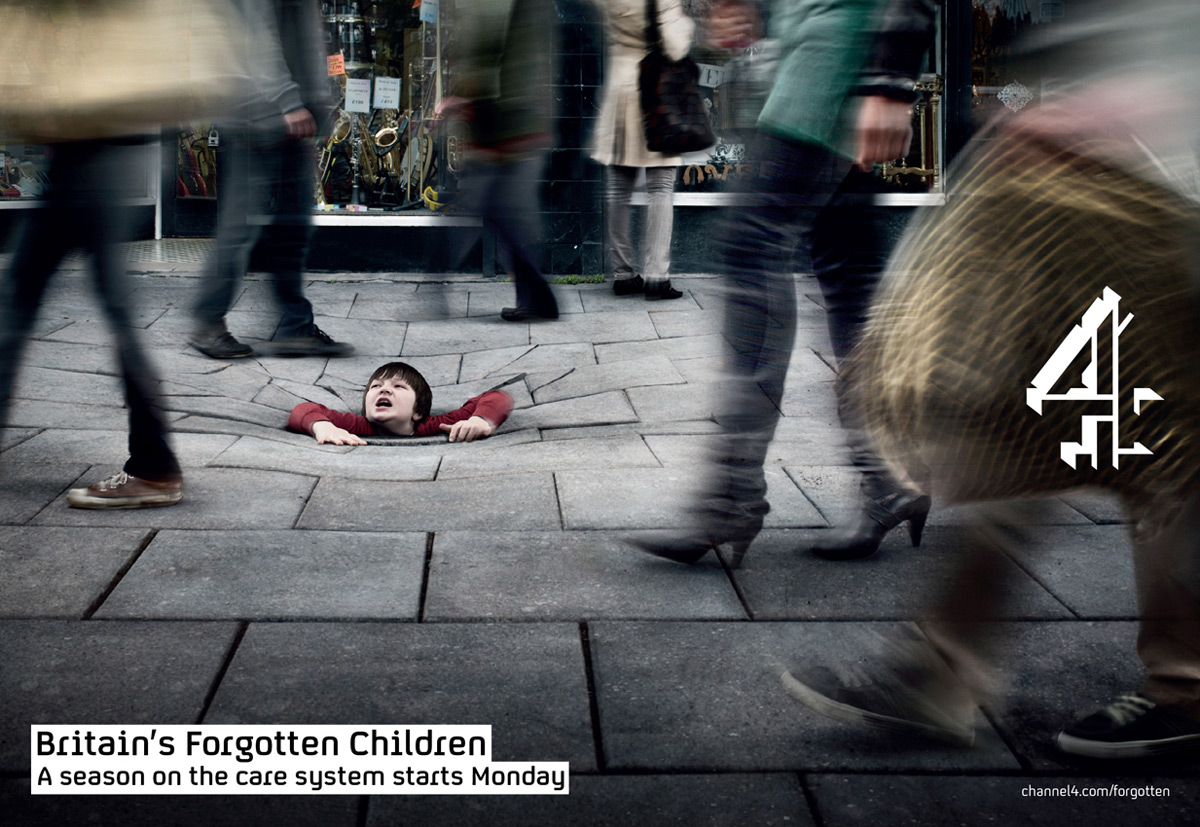

Codes and Conventions:
After looking into various Channel 4 documentary posters it became evident that there was a common theme - there were conventions that always remained the same.
In the poster there will always be a logo/brand. This is important so the viewers know who produced the documentary and where it will be aired. On channel 4 their logo tends to be located on the right hadn't side of the poster in most scenarios.
Documentary posters also tend to have a colour scheme - the colours are not always too bright in order to allow for print copies. These two posters are clear examples of this, the colours all match in some way and there never is too much colour range going on. Moreover either the colour of clothing of the individuals captured match the title or the logo does.
Lighting in images are also key, even though it may not be an obvious convention - it is of great important because it sets the mood. The lighting acts as an indication of the seriousness of the documentary. The second image 'disarming Britain' is a prime example of this because the lighting is quite dim however there is almost a spotlight on the boy. The darkness that surrounds him represents the brutality of of his reality, he is at the centre of it.
Camera shot and angles are also key features in posters - they are all used in ways to portray different meanings for example in the first poster the camera is looking down at the boy. This highlights this idea that he is powerless, and in other words on the verge of being forgotten.
Photo Ideas:
Our first initial idea was to have the two main boys sitting on a ledge in an estate - behind them the blocks are evident. We also planned to take it from a lower angle shot in order to suggest that they have power and dominance. Their faces would be covered up and they would be looking down making direct eye contact with the viewer. This poster was an idea that we had established at the start because it fulfilled the whole concept of the documentary - gang, violence, mystery, estate area


Our second idea was to have a disguised individual holding a sharp knife (main focus would be on the knife). This idea derived from the story behind the documentary where a life is taken due to a gang stabbing, the knife represents violence and exposes the reality of this lifestyle. From this image the viewer would be able to interpret that it has something to do with knife crimes, gangs and violence.
 |
| Main character |
The third idea was to to have an individual face away from the camera as he stares into the distance with his hood up. The area is uncared for and vandalised, this specific location was decided upon by the group because it explored this idea of gangs and undesired lifestyles (hard lifestyles). The fact that he is looking towards a tunnel is also significant to the shot from behind - this is because it is like we are almost seeing it from his perspective. It is like he is deep in thought perhaps contemplating whether to turn to he other side and leave his gang past behind.
 Decision:
After attempting to edit and visualise which images would look best, we decided to go for the third idea however also incorporate some of the second. Even though the first idea reflected the documentary in its entirety, it was far too common and overall not as of a good quality.
Documentary title decision:
After various group discussions we finalised the documentary title as "Violent ends". This both highlights that the story takes place around a dangerous area and that it all revolves around violence. Moreover this title was also chosen because the message of the documentary is that he regrets his involvement and in turn is trying to reform - it is both literally a violent end and an end to violence.
PHOTOSHOP EDITING:
 |
| Changing colour |
 |
| Adding text and figures |
 |
| Subtitles and colour |
 |
| Small yet noticeable edits |
OUTCOME:

Feedback on the Poster:
This was useful feedback because it showed us what we had done right in the poster and what had stood out most to the audience as well as receive constructive criticism.
Changes: After receiving feedback from the viewers and genuinely taking notice of the poster itself we decided to do something slightly different. Instead of having the guy holding the knife in the back as a representation of his dark shadow that he has chosen to leave behind, we decided to physically create one on the floor. This change was subtle but more appealing as it tells more of a story and is far more creative. The viewer is unlikely to be confused or mislead by it this time. In order to create the shadow we cropped a silhouette of the guy and placed him on the ground, after doing so we decided to put a life in his hand. This was a creative choice to allow a story to be told through the image.
THE FINAL OUTCOME:

Evaluations
1. In what ways does your media product use, develop or challenge forms and conventions of real media products?
2. How effective is the combination of your main product and ancillary texts?
3. What have you learned from the audience feedback?
4. How did you use media technologies in the construction and research, planning and evaluation
stages?


